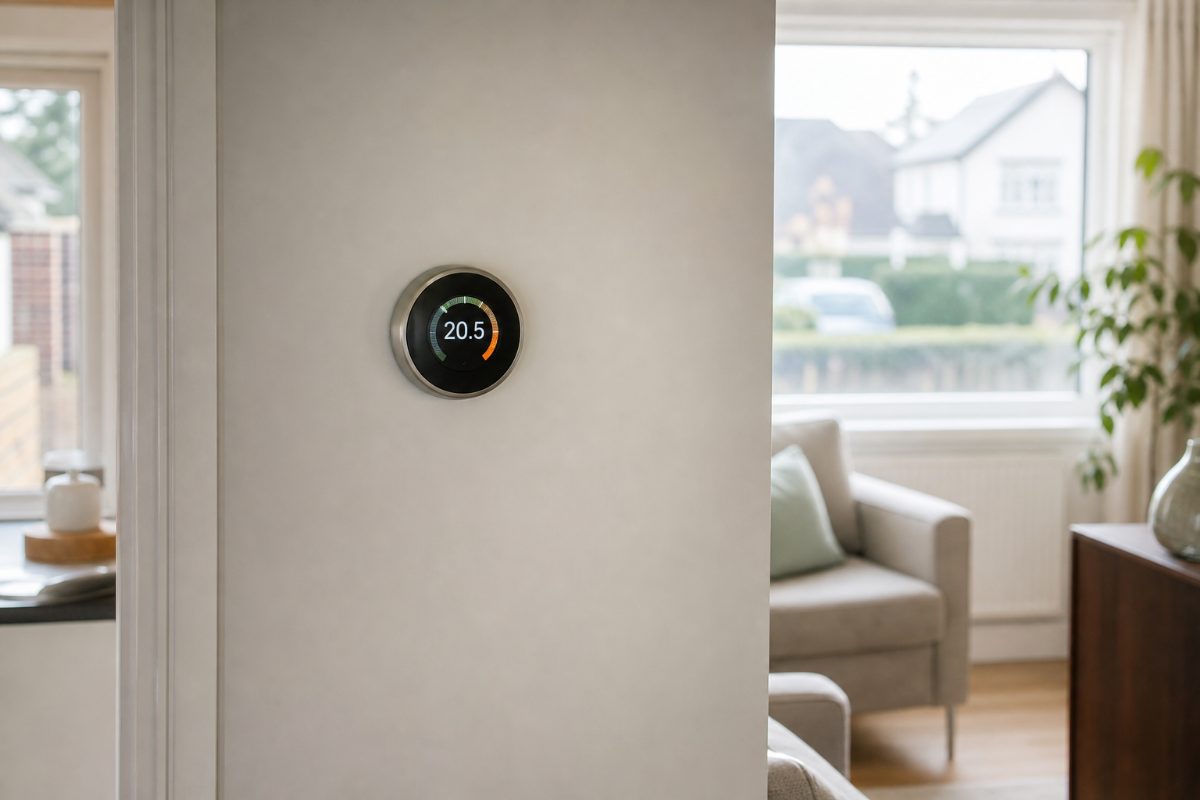
Most Irish homes run on a basic programmer and a single room thermostat, usually mounted in the hall, nowhere near where anyone actually spends time. The heating comes on, the boiler fires up, and whether the sitting room is 18 degrees or 24 degrees is really anyone's guess. Smart heating controls change that, but the market is full of jargon and products designed for the UK or American market that may not suit what we actually have here.
This is a plain walkthrough of what smart heating actually means in practice, what the main options are, and what fits the kind of semi-detached house most of us are living in.
What "smart heating" actually means
At its most basic, a smart thermostat replaces your existing programmer and room stat with a unit you can control from your phone. You can set schedules more easily, change the temperature from the couch or from work, and in most cases the system learns a bit about your habits over time. That is genuinely useful, not just a novelty.
Beyond the thermostat, you can add smart thermostatic radiator valves, usually called TRVs, to individual radiators. These let each room have its own temperature target rather than the whole house being at one setting. If the kids' bedroom is always warm and the home office is always cold, TRVs let you deal with that room by room.
Gas boiler systems: what works
The majority of Irish semi-Ds are on natural gas with a combi boiler or a system boiler and hot water cylinder. The good news is that smart thermostats designed for this setup are widely available and not that expensive to buy, though you will almost certainly want a qualified plumber or RGII-registered gas installer to fit the thermostat correctly and check the wiring.
The most commonly installed brands here are Hive, Nest (the Google one), Tado, and Honeywell Home. All four have Irish or UK distributors, work with standard boiler controls, and have apps that are reasonably straightforward to use. Nest and Tado both lean into learning your schedule and adjusting automatically. Hive tends to be simpler and more manual in how it works, which some people actually prefer.
Tado is worth a mention because it has good TRV support and lets you build a multi-room system that all talks to one app. If you have a system boiler with a cylinder, Tado can also control the hot water schedule, which Nest cannot do natively without extra kit.
One thing to check before buying anything: does your boiler have a "system boiler" or "combi" setup, and does it use a standard two-wire or three-wire connection for the existing thermostat. Most smart thermostats come with a bridge or receiver unit that replaces the old boiler wiring centre. An installer can confirm this in about five minutes. Do not skip that check, it will save you returning hardware.
Heat pump systems: a different situation
More homes in Ireland are now being retrofitted with air-to-water heat pumps, often as part of an SEAI grant scheme. Heat pumps work quite differently from gas boilers. They run best at lower flow temperatures over longer periods, and the heating logic that suits a gas boiler (blast of heat for an hour, then off) can actually work against a heat pump's efficiency.
Most heat pumps come with their own built-in controls or a proprietary app, and the installer will usually set these up. Brands like Mitsubishi, Daikin, and Nibe all have their own apps. The question is whether you can layer a third-party smart thermostat on top, and the honest answer is: sometimes, but not always, and it depends heavily on the specific heat pump model and how it was installed.
If you are getting a heat pump installed as part of a broader retrofit, it is worth asking your installer directly whether the system supports external smart controls, and if so which ones they recommend. Do not assume a Nest or Hive you already own will connect up cleanly. Some heat pump systems use OpenTherm, a protocol that allows smarter communication between the thermostat and the heat pump, and Tado in particular supports OpenTherm well if your unit does too.
For a heat pump home, the priority is usually getting the weather compensation and flow temperature settings right first. Smart scheduling matters less than it does with a gas boiler. A good installer who understands this is worth more than any app.
Smart TRVs: are they worth it?
Smart TRVs are one of those things that seem like a clear win but come with a catch. The catch is that most radiator valves in older Irish homes are not set up for them, and getting them fitted on every radiator in the house adds up in both cost and effort. A rough estimate for a three-bedroom semi with eight to ten radiators could run to a few hundred euro for the valves alone, plus installation time.
They make most sense in homes with clear problem rooms, a bedroom that overheats, a bathroom that is always too cold, a room that is only used in the evenings. If your house is already fairly balanced, the gain may not be worth the investment straight away.
If you are planning a bigger renovation and thinking about smart controls as part of that, the kind of detailed planning that helps with budgeting and scoping is something writing a proper spec before you sign anything covers well, and the same thinking applies to a heating upgrade as it does to any trade work.
Start with a smart thermostat and live with it for a heating season before deciding on TRVs. You will have a much better sense of where the real problems are once you can actually see the temperature data.